
Going analog, my wife’s puzzlement and the secret poem.
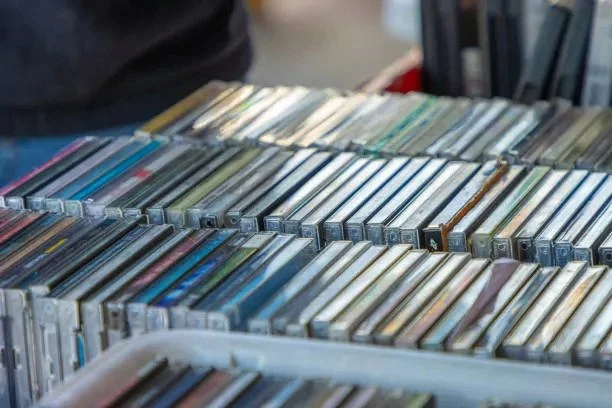
So it happened: I came home with a new CD. My wife looked at me. ‘You don’t have a CD player.’ ‘Not yet,’ I said. And that was the beginning of what you’ve probably already guessed, something that also has a name: going analog. I typed ‘going analog’ after a session with a client and that’s where I discovered the concept. A client mentioned it, and then I stumbled on a piece by Tayo Bero in The Guardian last week (an article actually written five months ago). She wrote about her return to analog life, and there it was, she’d described and named a change I’d been living through myself.
I must tell you, cathartically, as my personal therapy: I wanted to buy some food to take away. Unfortunately it was in a chain, and there was an employee there, but he told me to go and order at the machine. I went there, and the machine asked if I had the app. Not even Philip K. Dick could have imagined a future like this. Thank goodness I could still order without the app. Get me out of this system, please, nobody asked me if I wanted this, and nobody can save me. I am sure I am not the only one to see this madness, and so I did what I could, trying to rebel quietly in the way I could, with my little peaceful going-analog revolution.
I went back to crossword puzzles tucked into my bag, a phone that only rings instead of buzzing with notifications (and yes, people get annoyed when I don’t reply to texts straight away, that’s a separate issue). I started buying CDs, bought a CD player, and then discovered my car already had one.
It began with a CD picked up for peanuts on Vinted. I enjoyed it, and found myself thinking: as a teenager I couldn’t just buy a CD on a whim, I had to save up for it. That thought brought back all this beautiful nostalgia, and the feeling of an album’s soul rather than a compilation of hits. There’s a ritual to it that streaming erased without me noticing. You choose an album, not a playlist assembled by an algorithm that thinks it knows you. You hold the case, read the liner notes, see the handwriting of whoever designed the cover art. You press play and commit to the whole thing, front to back, the way the artist intended. No skip button pulling you toward the next dopamine hit. No autoplay dragging you into a stranger’s playlist. Just the album, as it was made.
Bero writes about this same pull toward things we can touch, things with flaws and fingerprints on them, and that line landed somewhere true for me. A scratch on a CD, a crease in the case, a handwritten note tucked inside from whoever gave it to you years ago: these are evidence that a life happened around the object. My streaming library has none of that. It’s clean, infinite, and strangely weightless. I’m sorry I can’t fully explain it. I’m trying, though I don’t think Bero can either.
But I am sure Bero and many of you can understand that I was participating and engaging with the music rather than just consuming it, and this engagement was rewarded by a poem I found on the back cover of Bob Dylan’s 1969 album Nashville Skyline, called ‘Of Bob Dylan.’ If you’ve read this far, you deserve it, so here it is:
Of Bob Dylan
There are those who do not imitate,
Who cannot imitate
But then there are those who emulate
At times, to expand further the light
Of an original glow.
Knowing that to imitate the living
Is mockery
And to imitate the dead
Is robbery
There are those
Who are beings complete unto themselves
Whole, undaunted,-a source
As leaves of grass, as stars
As mountains, alike, alike, alike,
Yet unalike
Each is complete and contained
And as each unalike star shines
Each ray of light is forever gone
To leave way for a new ray
And a new ray, as from a fountain
Complete unto itself, full, flowing
So are some souls like stars
And their words, works and songs
Like strong, quick flashes of light
From a brilliant, erupting cone.
So where are your mountains
To match some men?
This man can rhyme the tick of time
The edge of pain, the what of sane
And comprehend the good in men, the bad in men
Can feel the hate of fight, the love of right
And the creep of blight at the speed of light
The pain of dawn, the gone of gone
The end of friend, the end of end
By math of trend
What grip to hold what he is told
How long to hold, how strong to hold
How much to hold of what is told.
And Know
The yield of rend; the break of bend
The scar of mend
I’m proud to say that I know it,
Here-in is a hell of a poet.
And lots of other things
And lots of other things.
— Johnny Cash
What an invitation to live ‘complete unto itself, full, flowing’ — and not as a photocopy of somebody else’s life! And if you write, are you willing to be, as he says, a source, rather than an imitation? I am going off on a tangent, of course — I am not feeding you someone else’s rhythm or algorithm, I am doing my own thing, writing slowly, and that’s what happens: the mind wanders instead of echoing someone else’s writing, instead of writing perfectly and this is what makes my writing perfect. This moment, in which I went off on a tangent, is where I showed something that Biro and I couldn’t name.
After reding this poem, I think my wife is any longer puzzled about my new enthusiasm plus I can’t half-listen while scrolling and skipping every twenty seconds. I sit with the record. I let it finish. In a strange way, it’s become a small daily practice in doing one thing at a time — closer to genuine attention than anything my phone has ever offered me.
Bero’s essay ends on the idea that we haven’t fully lost touch with the physical world, even living mostly inside screens and I believe that’s true.
I still stream plenty. I’m not pretending otherwise, and I’m not interested in performing some purist rejection of technology I use every day for work and everything else. But there’s a section of my shelf, and a reacquired version of my Self, that now belongs entirely to me, in a way nothing on my phone ever will.
