

The ideas library
“How do I know what I think until I see what I say?" E.M. Forster
Welcome to my ideas library, dear reader. I’m glad you’re here.
Explore a collection of essays and articles I’ve written exploring psychological concepts through attachment, spirituality, modern culture and humour.
Categories:
-
Reflections on Buddhist psychology, mindfulness and contemplative practices taken from various world religions and different spiritual traditions. Putting together mind, meaning and spiritual life.
See all Psychology & Spirituality articles -
Exploring attachment theory, relationships and psychotherapy.
See all Understanding Attachment articles -
Clear, accessible explorations of psychological ideas and research.
See all Psychology Explained articles
-
Essays on AI, ethics and how technology is reshaping our lives.
See all Technology & Society articles -
Reviews and reflections on books, films and the ideas they provoke.
See all Books, Films, Art articles -
Looking at deep concepts through a lighter side of life.
Therapist: “You handled it so well.” Client: “No, I didn’t. I was falling apart.” (Supervision 22/9/2026).
In therapy, we are often encouraged to look at difficult experiences differently. Reframing can be helpful, but sometimes we move too quickly towards finding the positive meaning in suffering. Being told that you are “stronger than you realise” or that you have “grown through adversity” may be reassuring, but it can also leave the experience itself unheard.
This article explores the role of reframing, resilience and emotional processing in psychotherapy, drawing on Carl Rogers and the person-centred approach. It considers why functioning does not always mean coping, how people can hide profound distress behind apparently successful lives, and why understanding your experience may sometimes be more important than immediately changing your perspective.
For anyone experiencing anxiety, trauma, emotional distress or difficulties in understanding their own reactions, therapy can provide a space to explore what is happening without having to turn it into a positive story before you are ready.
Shoji Morimoto, The Man Who Did Nothing, on Purpose
There was a man in Tokyo who spent most of his life being told, gently and not so gently, that he was nothing much. Not lazy exactly, just absent somehow, even when he was in the room. A boss once told him plainly: it makes no difference whether you're here or not. He remembered that sentence for years.
One day, out of work and out of ideas, he did something almost accidental. He wrote a short post offering himself for hire. He would sit with you while you ate lunch alone. He would wave from the platform as your train pulled away. He would come with you to the divorce office, simply so the room wasn't empty. He wasn't there to fix, advise, or perform any useful task. He was only there.
He expected nothing. Within months, thousands of people wanted exactly what he was offering.
Client: "I'm such a terrible person!" Therapist: "I don't think that's true at all."
"Terrible... that's such a heavy word to land on yourself with." Not "no you're not, you're wonderful." A look at why the instinct to reframe someone's pain, however kind, is often the moment we stop being with them and start being clever near them instead. First in a series on the difference between listening and reframing.

Enjoy the Silence? Nah, studies show we’d rather gave an electric shock!
We live in a world that rarely goes quiet and research suggests many of us have genuinely lost the ability to sit with our own thoughts, some even preferring mild discomfort over stillness. This piece looks at why silence unsettles us, what we're avoiding when we fill every spare moment with noise, and how learning to sit with quiet can sharpen our thinking, steady our emotions, and reconnect us with what actually matters to us.

Going analog, my wife’s puzzlement and the secret poem.
"My wife looked at me. 'You don't have a CD player.' 'Not yet,' I said." A small essay on going analog — CDs, crossword puzzles, a phone that only rings, and the slow rediscovery of paying attention to one thing at a time.

The girl who remembered a hundred and twenty lives, did she?
In 2003, a Russian teenager woke from a fainting spell speaking 120 languages, some of them dead for centuries. She said she was remembering past lives. Here's what actually happened.
The Dark Humour of Carl Jung
Carl Jung's dry wit was never merely amusing. Hidden within his sarcasm and irony were profound psychological insights about identity, certainty, spirituality and the human tendency to escape ourselves. By exploring four of his sharpest remarks, we discover that humour can sometimes reveal truths more effectively than seriousness ever could.

Watching the Film “Adaptation” Through the Lens of Body Dysmorphia — 7 Takeaways
Body dysmorphia isn't just about disliking your appearance — it's a self-reinforcing cycle of shame, safety behaviours, and avoidance that keeps getting stronger the more you try to control it. Charlie Kaufman's "Adaptation" captures that cycle with unusual precision. Here are 7 takeaways on how it works, drawn from a CBT lens, and what actually helps.

Did the Buddha Know the Way of the Parasympathetic Nervous System?
Why is it that the harder we try to fix ourselves, the further healing seems to slip away? In one of Buddha's most profound teachings, a muddy lake becomes a powerful metaphor for the human mind and body. Just as muddy water clears when left undisturbed, our bodies possess an extraordinary ability to heal when we stop forcing, controlling, and constantly doing. In a world driven by endless stimulation and digital overload, this ancient lesson is more relevant than ever: true healing begins not with effort, but with stillness.
CBT or EMDR? Looking at Trauma Through the Lens of Modern Physics
What if trauma is not simply a painful memory, but a disruption in our relationship with time itself? Drawing on the ideas of Carlo Rovelli, Julian Barbour and Fotini Markopoulou, this article explores how modern physics offers a fresh perspective on trauma, memory and healing. Through clinical insights and examples from everyday life, it examines why traumatic experiences can feel permanently present and how EMDR and CBT help restore movement through time. A thought-provoking exploration of the surprising connections between psychology, neuroscience and contemporary physics.

Can an 800-year-old story teach you one of the most powerful secrets of the mind and tame your anxiety?
What can an 800-year-old story possibly teach us about modern anxiety? This reflection on the Tibetan yogi Milarepa's encounter with demons in his cave reveals a surprisingly simple truth about fear, resistance, and the mind — one that echoes through therapy rooms and meditation halls alike.
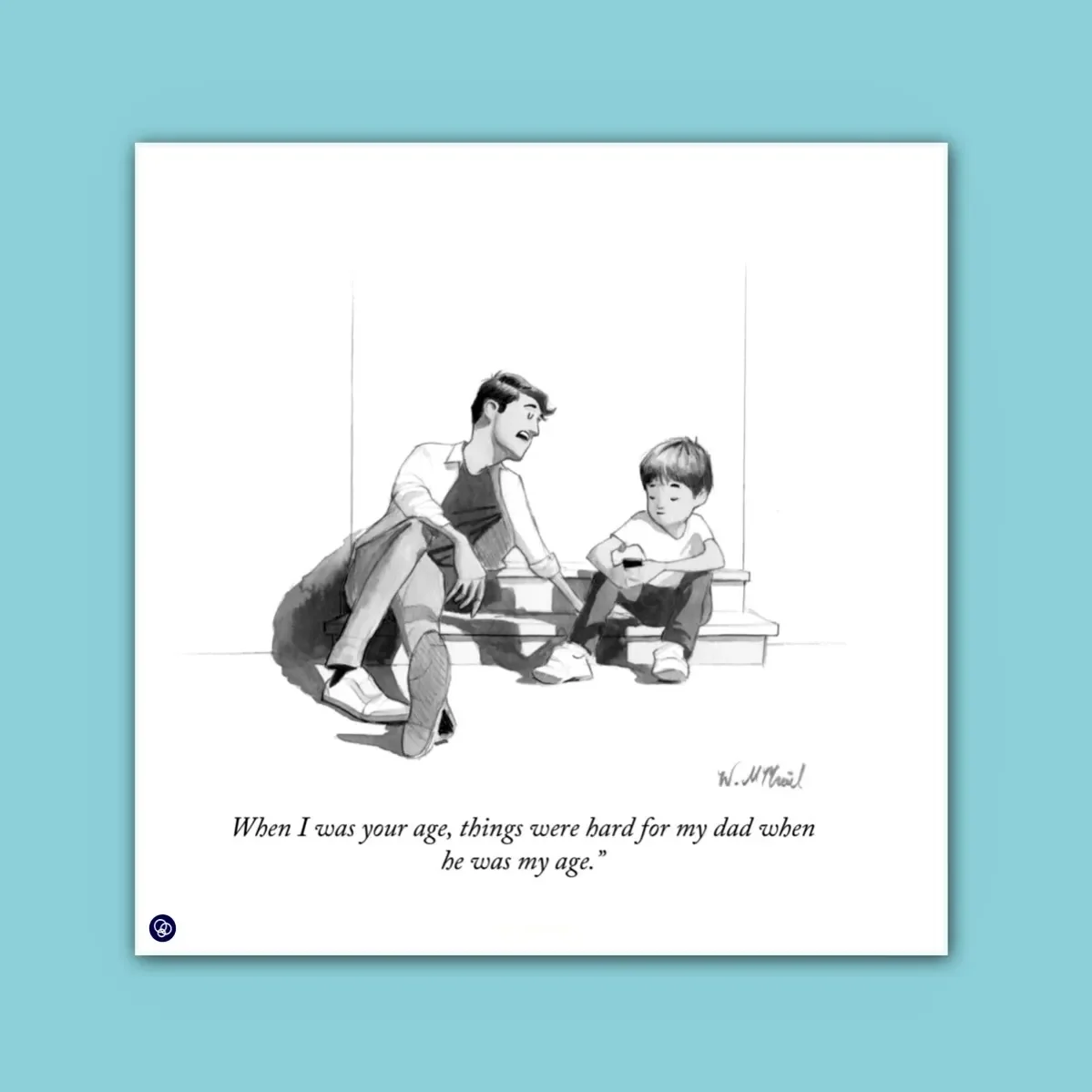
Life is a continuum
Every generation inherits echoes of the one before — but are we destined to repeat them? Drawing on the wisdom of Thich Nhat Hanh, this reflection explores how mindfulness and conscious choice can transform inherited hardship into healing, and how the present moment holds the power to reshape the legacy we leave behind.

4 Lessons I Learned from ‘The Path to the Nest of Spiders’
A boy steals a gun and, in that moment, loses something more valuable than he gains. Drawing on Italo Calvino's The Path to the Nest of Spiders and Tim Ingold's image of the spider and its web, this reflection explores the psychology behind why we tie our identity to external things — money, status, objects — and why true power only ever comes from within.

The Doctor, the Wife, and the Eggs: The Psychology of Secondary Gain
An old joke about a man, his wife, and some eggs opens onto a bigger question: why do we stay in situations we know aren't right? A look at secondary gain, drawing on Scott Peck's The Road Less Traveled and years of clinical observation.
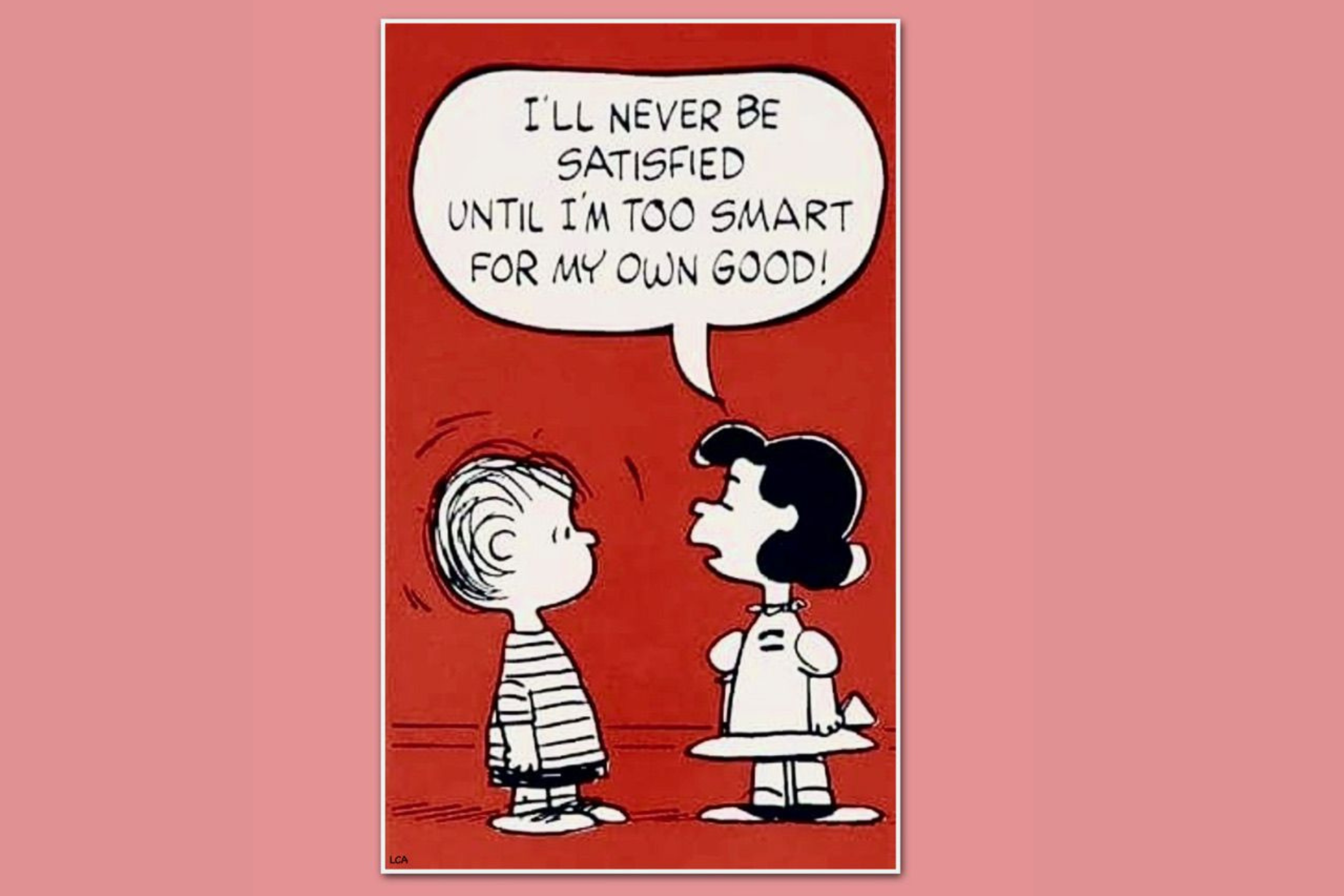
“I’ll never be satisfied until I’m too smart for my own good!”
Lucy, the amateur psychiatrist, to Linus, the young philosopher


Therapy: A Manifesto for Why It’s More Art Than Science
“The role of the artist is to ask questions, not answer them.”
— Anton Chekhov
I am a rebel. While so many strive to turn psychotherapy into a perfect science, I see it as more art than science.

Help, This Is Already Happening! (Where have all the people gone?)
What makes an interaction worth having?
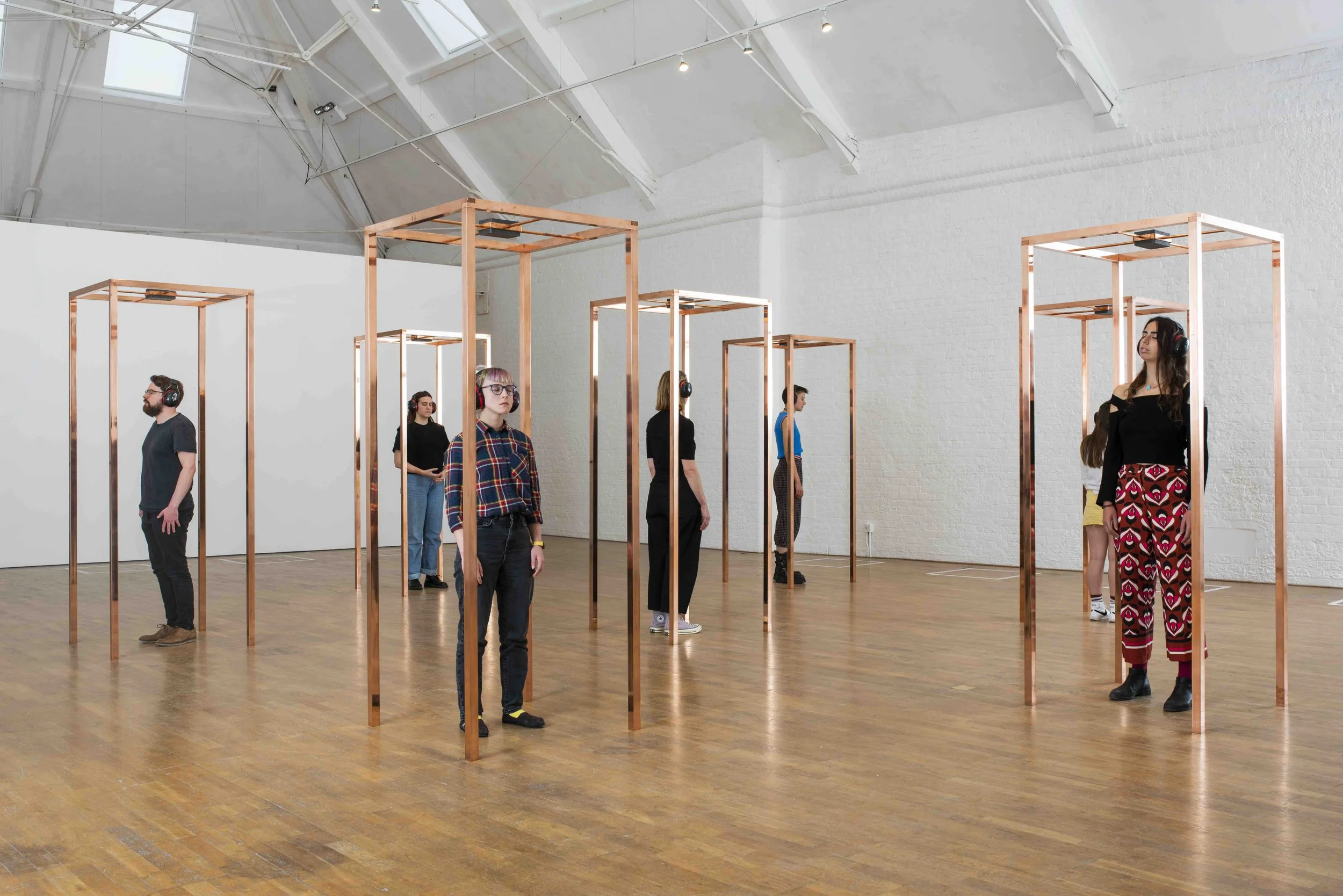
Marina Abramović's Rhythm 0: Between the Flower and the Blade
Marina Abramović, a performance artist born in Belgrade, often called the grandmother of performance art, has always used her own body as the stage and the question. In 1974, in Naples, she created Rhythm 0.add