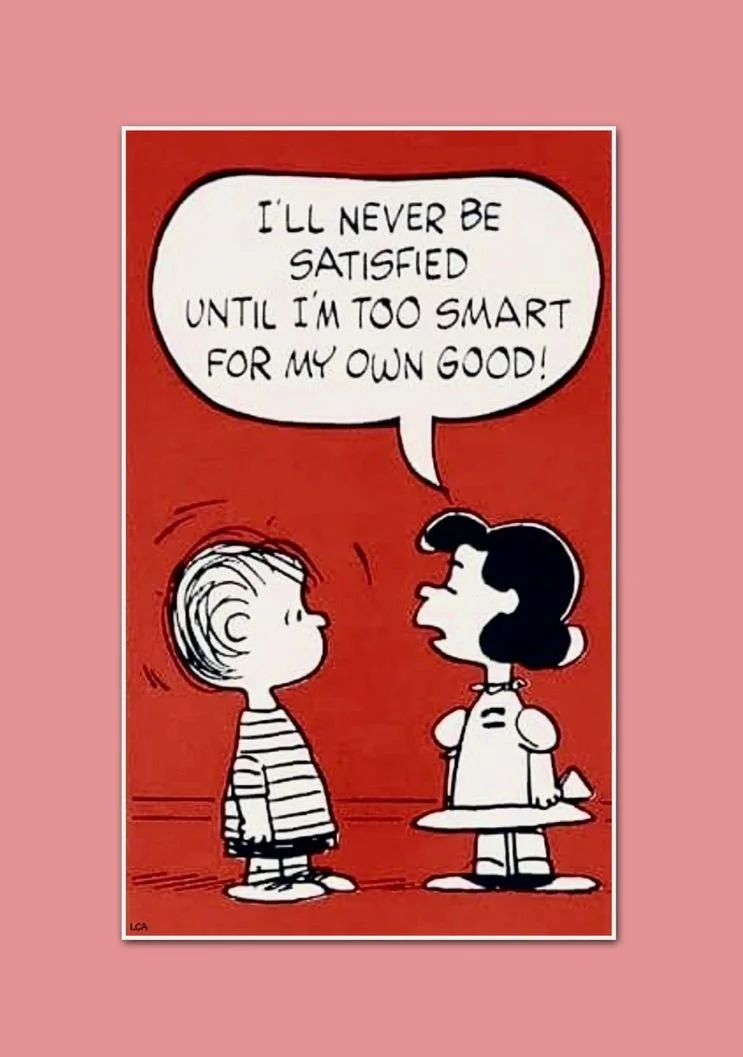
“I’ll never be satisfied until I’m too smart for my own good!”
Lucy, the amateur psychiatrist, to Linus, the young philosopher
“I’ll never be satisfied until I’m too smart for my own good!”
By Charles M. Schulz
Lucy, the need to be 'too smart for your own good' could reflect a deeper emotional need for validation or control.
Often, we pursue intellectual achievements or success not for their own sake, but to compensate for a lack of self-acceptance or to distract ourselves from unresolved emotional pain.
True satisfaction comes not from being smarter or better, but from understanding and accepting the parts of ourselves we often overlook or suppress